CAM Reconciliation Software for Pre-Statement Verification
CapVeri verifies the financial math behind Common Area Maintenance billing: gross-up calculations, cap enforcement, pro-rata validation, and CapEx treatment before statements go to tenants.
CapVeri verifies CAM output. It does not replace your ERP, tenant-side accounting, legal interpretation, or outsourced capacity.
What it does
CAM reconciliation software verifies that Common Area Maintenance charges billed to tenants match actual expenses, lease terms, and BOMA standards. CapVeri replaces manual spreadsheet reconciliation with deterministic calculations that trace every charge to a GL line item and lease clause.
Why Manual CAM Reconciliation Fails
Spreadsheet-based reconciliation is slow, error-prone, and impossible to audit. Here is what goes wrong.
Gross-up errors compound silently
Applying 90% when the lease says 95% understates the normalized expense pool. At $500K of variable expenses and 78% occupancy, that single misread drives a $14,000 billing error. It repeats every year until someone catches it.
Cap calculations break in spreadsheets
Cumulative caps compound from a base year. Non-cumulative caps reset annually. Most spreadsheets use the same formula for both, silently overbilling or underbilling tenants for the life of the lease.
CapEx leaks into recoverable expenses
A $180K roof replacement coded to a maintenance GL account passes straight through to tenant bills. Without systematic CapEx detection, these misclassifications trigger disputes, refund requests, and audit findings.
No traceability when tenants audit
When a tenant exercises audit rights, you need to show exactly how every charge was calculated: which GL lines, which lease clause, which occupancy rate. Spreadsheets can't produce that trail without hours of reconstruction.
Six Calculations That Replace Your Spreadsheet
Every calculation uses deterministic financial math. No AI approximation on the numbers that determine what tenants owe.
Gross-Up Automation
Automatically normalizes variable operating expenses to the lease-defined occupancy threshold. Handles 90%, 95%, and custom thresholds per tenant with deterministic math. No AI guesswork on financial calculations.
Cap Enforcement
Enforces cumulative and non-cumulative CAM caps, separating controllable from uncontrollable expenses before applying the limit. Catches the most common overbilling error in commercial leases.
Pro-Rata Validation
Validates pro-rata share calculations against the lease-defined denominator (total leasable RSF vs. building RSF). Flags share percentages that don't match the stated square footage.
CapEx Detection
Identifies capital expenditures misclassified as operating expenses in the GL export. CapEx items like roof replacements and HVAC systems are typically excluded from recoverable CAM. Catching them prevents tenant disputes.
Audit Trail
Every reconciled figure traces back to a specific GL line item and lease clause. When tenants exercise audit rights, you have a defensible record that shows exactly how each charge was calculated.
BOMA 2024 Alignment
Validates expense classifications and area measurements against BOMA 2024 aligned workflows. Flags items for review before they become billing disputes or audit findings.
CapVeri vs. the Alternatives
Compare CAM reconciliation approaches: purpose-built software vs. spreadsheets, ERP add-on modules, and outsourced services.
For landlord-side verification, CapVeri combines CSV setup, deterministic gross-up/cap math, and an audit trail built for dispute readiness. ERPs are the right tool when you need full accounting, leasing, AP, or tenant operations.
| Feature | CapVeri | Excel | ERP Module | Outsourced |
|---|---|---|---|---|
| Gross-up calculation | Manual formula | Basic | ||
| Cumulative cap enforcement | Error-prone | |||
| Pro-rata validation | Manual | Basic | ||
| CapEx detection | ||||
| GL-to-lease traceability | ||||
| Time per building | ~15 min | 4-8 hours | 1-2 hours | 2-4 weeks |
| Cost per building | Annual self-serve pricing from starts at $998/year with 80OFF | $500+ labor | $5K-$25K/yr module | $2K-$5K each |
| Works with any PMS | Same vendor only |
Modeled Recovery: $5.9K – $35.3K per Building
Based on industry data showing 1–6% average overcharges on CAM billings, a 100,000 SF office building with $5.89/SF in operating expenses yields $5,890 to $35,340 in recoverable errors per reconciliation cycle. CapVeri finds these errors in minutes instead of weeks.
With annual self-serve pricing from starts at $998/year with 80OFF, CapVeri can pay for itself when it catches one modest CAM billing error.
Works With Every Property Management System
CapVeri needs no integration. Instead of expensive API connections that break with every software update, it reads the CSV and Excel exports you already produce.
Yardi Voyager
GL export, rent roll, budget vs. actual
MRI Software
GL detail, lease abstract, recovery schedule
RealPage
Operating statement, GL transaction detail
Any CSV Export
AppFolio, Buildium, Rent Manager, custom ERP
No API keys, no integration fees, no vendor lock-in. Export from your PMS, upload to CapVeri, reconcile.
See It In Action
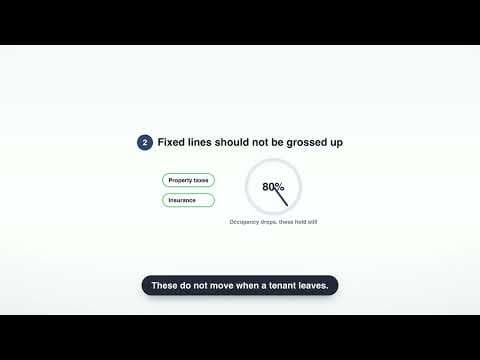
Many CAM bills have a costly mistake. See where yours could be wrong.
Frequently Asked Questions
What is CAM reconciliation software?
CAM reconciliation software automates the process of verifying Common Area Maintenance charges billed to commercial tenants against actual expenses, lease terms, and accounting records. It replaces manual spreadsheet work with deterministic calculations that enforce gross-up rules, expense caps, pro-rata share formulas, and exclusion clauses defined in each lease.
How does CapVeri find CAM billing errors?
CapVeri ingests your GL export (from Yardi, MRI, RealPage, or any CSV) and your lease terms, then runs deterministic financial calculations: gross-up normalization, cap enforcement, pro-rata share validation, CapEx reclassification, and expense exclusion checks. Every discrepancy is flagged with the exact GL line, lease clause, and dollar impact.
Does CapVeri integrate with Yardi and MRI?
CapVeri needs no integration. Instead of expensive API connections, it reads standard CSV and Excel exports from Yardi Voyager, MRI Software, RealPage, AppFolio, and any other property management system. This works with every system version, including older on-premise setups, and avoids integration fees.
How much does CAM reconciliation software cost?
Reconcile starts at $998/year with 80OFF. List price starts at $4,990/year for up to 25 rentable units. 26-150 units: $179 per extra unit/year; 151-500 units: $169 per extra unit/year; 501-2500 units: $159 per extra unit/year; 2501+ units: $149 per extra unit/year. 80% off the first year.. 30-day free trial. No credit card required to start. Add annual billing before the trial ends to keep access. Reconcile pricing is annual and scales by rentable unit count.
What is gross-up in CAM reconciliation?
Gross-up adjusts variable operating expenses to reflect what they would be at a specified occupancy level (typically 95%). When a building is partially vacant, landlords incur lower variable costs but are contractually entitled to recover expenses as if the building were occupied to the lease-defined threshold. Getting the gross-up threshold wrong is one of the most common sources of CAM billing errors.
Can CapVeri handle cumulative and non-cumulative CAM caps?
Yes. CapVeri enforces both cumulative caps (which compound year-over-year from a base year) and non-cumulative caps (which reset each year). It also correctly separates controllable from uncontrollable expenses before applying the cap, since caps typically apply only to controllable costs while taxes and insurance pass through uncapped.
How long does a CAM reconciliation take with CapVeri?
Timing depends on portfolio size, export quality, and how many lease terms need review. CapVeri keeps the process structured: upload the GL export, confirm lease terms, run deterministic checks, and focus review time on the exceptions that matter.
How does CapVeri support BOMA standards?
CapVeri supports BOMA 2024 aligned workflows for measurement standards and expense classification. The platform flags items for review and keeps lease terms as the source for billing rights.
Verify CAM Statements Before They Go Out
Start your 30-day free trial. Upload a GL export, enter lease terms, and review exceptions with the source GL line and lease rule attached.
Reconcile starts at $998/year with 80OFF. List price starts at $4,990/year for up to 25 rentable units. 26-150 units: $179 per extra unit/year; 151-500 units: $169 per extra unit/year; 501-2500 units: $159 per extra unit/year; 2501+ units: $149 per extra unit/year. 80% off the first year.. 30-day free trial. No credit card required to start. Add annual billing before the trial ends to keep access.